

Key takeaways:
- Companies who are committed to digital trust are 1.6x more likely to see revenue growth of at least 10% annually.
- Business can build trust by focusing on clarity, consistency, quality, accountability and human connection.
- Strengthening trust isn’t a single initiative, it’s an ongoing practice throughout every aspect of your business, both internal and external.
In this post:
Share this post:
"Trust is the ultimate currency between a business and its stakeholders."
– Richard Edelman
And that currency is under pressure.
The 2025 Edelman Trust Barometer shows trust slipping across institutions, with 61% of people holding a moderate or high sense of grievance, meaning they believe business (and government) serve narrow interests and make life more difficult. That skepticism reshapes how audiences interpret everything a company says and does.
When trust is already fragile, audiences become more sensitive to inconsistencies and far less forgiving of shortcuts. Automation without intention – like generic AI noise, unclear policies, and subscription traps – can chip away at confidence. People want clarity. They want consistency. They want to believe a company means what it says.
A McKinsey survey found that companies most committed to digital trust are 1.6x more likely to see revenue growth of at least 10% annually. Gartner indicates that 81% of customers refuse to buy from a brand they don’t trust, even when alternatives are limited.
Trust is more than strategic; it’s a growth strategy.
5 practices that build trust
- Consistency. People trust what feels steady. Deloitte notes that brands that show up consistently can earn up to 3× higher loyalty. Consistency signals focus, alignment, and operational maturity.
- Clarity. Plain language. Clear offerings. Honest expectations. Salesforce reports that 87% of customers expect clear, empathetic communication and will switch providers if they don’t receive it.
- Quality. In a market saturated with low-effort content, quality stands out. It communicates seriousness. It shows respect for your audience’s time. It also sets an internal bar for how teams show up.
- Accountability. Closing loops. Owning mistakes. Being transparent about decisions. According to PwC, 93% of business executives agree that building and maintaining trust improves their bottom line, though the majority also report facing challenges in establishing trust with stakeholders.
- Human connection. People respond to communication that sounds like people, not process manuals. McKinsey notes that humanized communication is a top driver of brand preference and long-term loyalty.
Key advantages of high-trust brands
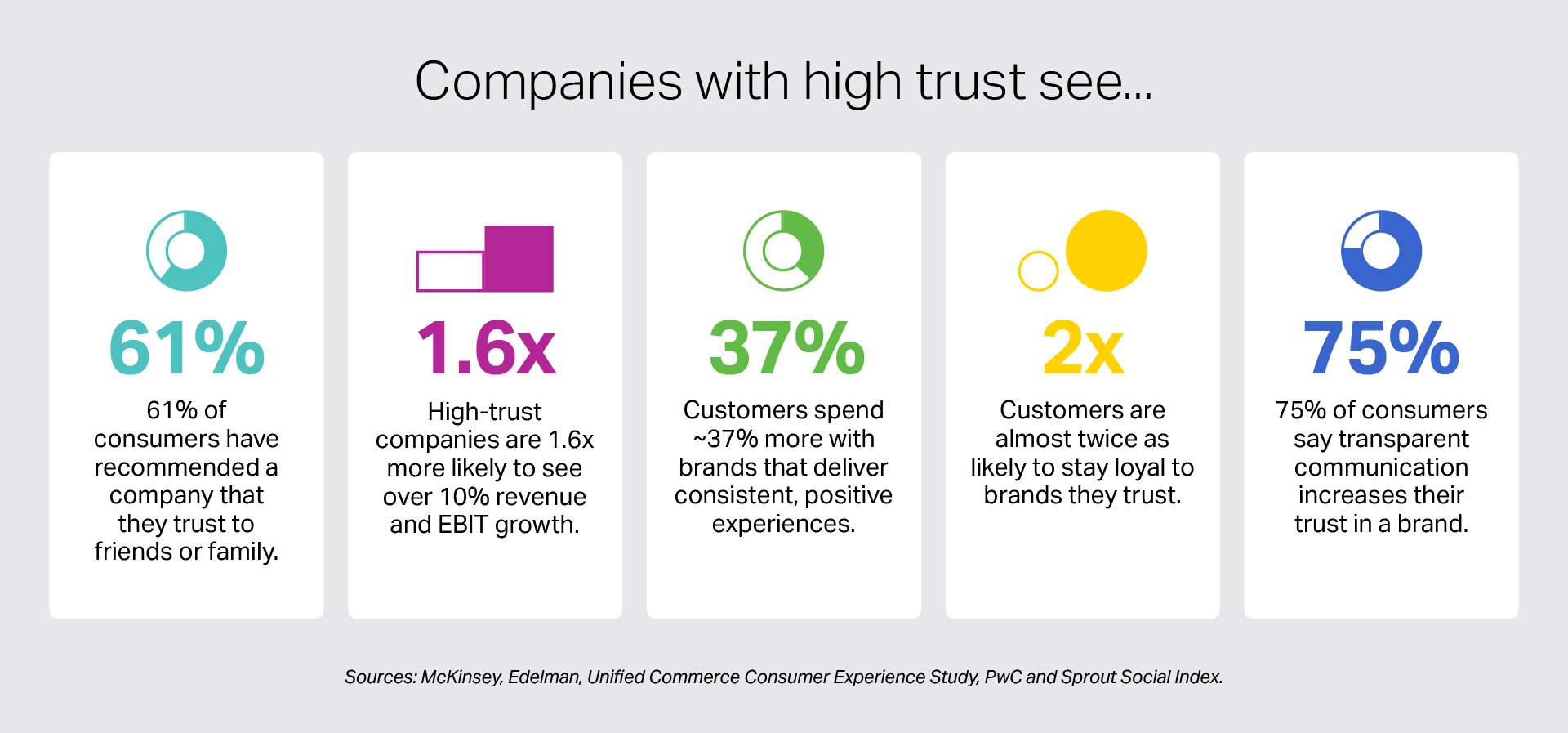
These aren’t complex ideas. But they do require discipline. Trust grows when companies behave the same way in every interaction: clear, consistent, aligned, and helpful.
The question isn’t “Can we afford to invest in trust?” It’s: “Can we grow without it?”
Strengthening trust isn’t a single initiative, it’s an ongoing practice. It shows up in how clearly you communicate, the quality of what you put into the world, how aligned your teams are, and the partners you bring in to help you stay consistent as expectations evolve.
Over time, this kind of discipline becomes a signal that people notice. It shapes whether customers believe your message, how teams rally around your decisions, and how durable your relationships are when things get uncertain. Trust grows out of clarity, consistency, and the confidence you show day after day.
How will you build trust?