

Key takeaways:
- As Simon Sinek says - people don't buy what you do, they buy why you do it.
- Defining your why sharpens strategy, defines purpose, builds trust and boosts team spirit.
- Great companies, and great leaders, know their why and align everyone around it.
In this post:
Share this post:
Subscribe:
Imagine someone asks you, “What does your company do?” Most leaders can answer that in a heartbeat. But if the next question is, “Why does it matter?”, the conversation often gets quiet.
That second question is the one that separates good companies from great ones.
Your “why” is the deeper reason your business exists. It’s not just about revenue targets or quarterly goals. It’s about the value you create, the problems you solve, and the impact you make on your clients, your industry, and your people. And in a world full of noise, clarity of purpose is what cuts through.
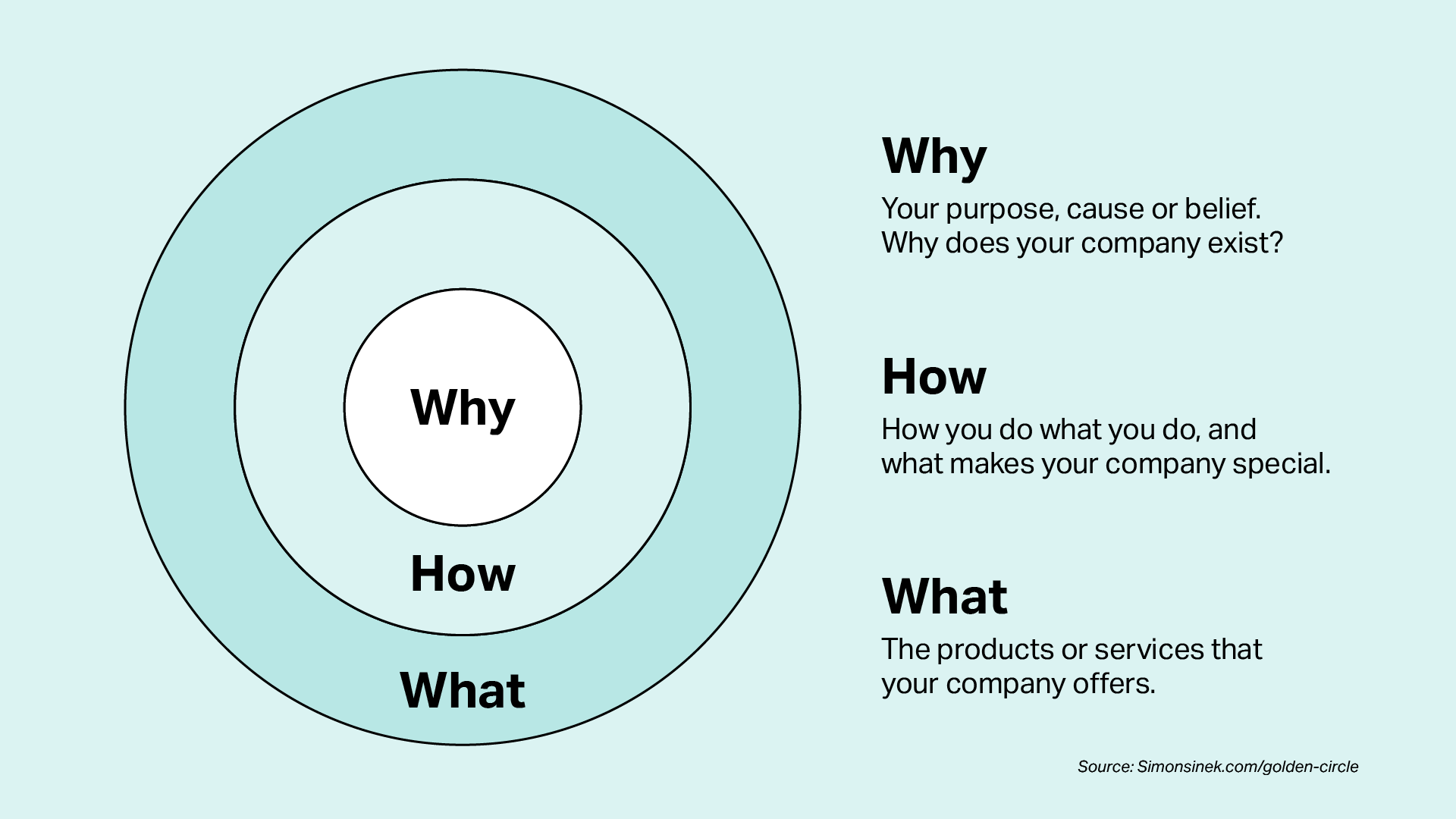
Bestselling author of the book, Start with Why, and “unshakeable optimist” Simon Sinek puts it like this: People don’t buy what you do, they buy why you do it. He uses The Golden Circle (why, how, what) as a method for understanding and defining why we do what we do.
The Golden Circle
Why it's worth defining
- It sharpens strategy. When your team knows the mission, decisions become faster and more focused.
- It defines brand purpose. In a crowded market a well-defined brand purpose can set a company apart from its competitors.
- It builds trust. Customers and partners want to work with companies that stand for something.
- It energizes teams. People want to know their work matters. A clear “why” gives them that connection.
How to find your "why"
Here are three exercises to help you uncover and clarify purpose:
- The Impact Audit. Ask: If our company disappeared tomorrow, what would our customers miss? This helps surface the real value you provide – not just what you sell, but why it matters.
- Client Conversations. Talk to your best clients. Ask why they chose you, what keeps them coming back, and what they tell others about you. Their words can often reveal your purpose more clearly than internal brainstorming.
- The Golden Circle. Break your business into three layers: What you do (products/services), how you do it (your approach, differentiators), and why you do it (mission, impact). If the “why” feels vague or hard to remember, it’s time to refine it.
Your “why” should be simple, strong, and repeatable. If your team can’t say it out loud, your customers won’t feel it. And if your leadership team isn’t aligned around it, your strategy will drift. Defining your “why” isn’t just about messaging or a branding exercise, it’s about leadership.
What is your why?